I got insanely lucky and snagged this 100B and finally had a few moments to sit down with it, so here are some initial impressions. I need to spend a bit more time dialing it in and something I've been adamant about is that I think you need to own an amp for a month or more before you make decisions about the tone. I also own an early 101B with Mercury Magnetics transformers, so apologies in advance but I’m going to be making a lot of comparisons to that amp.
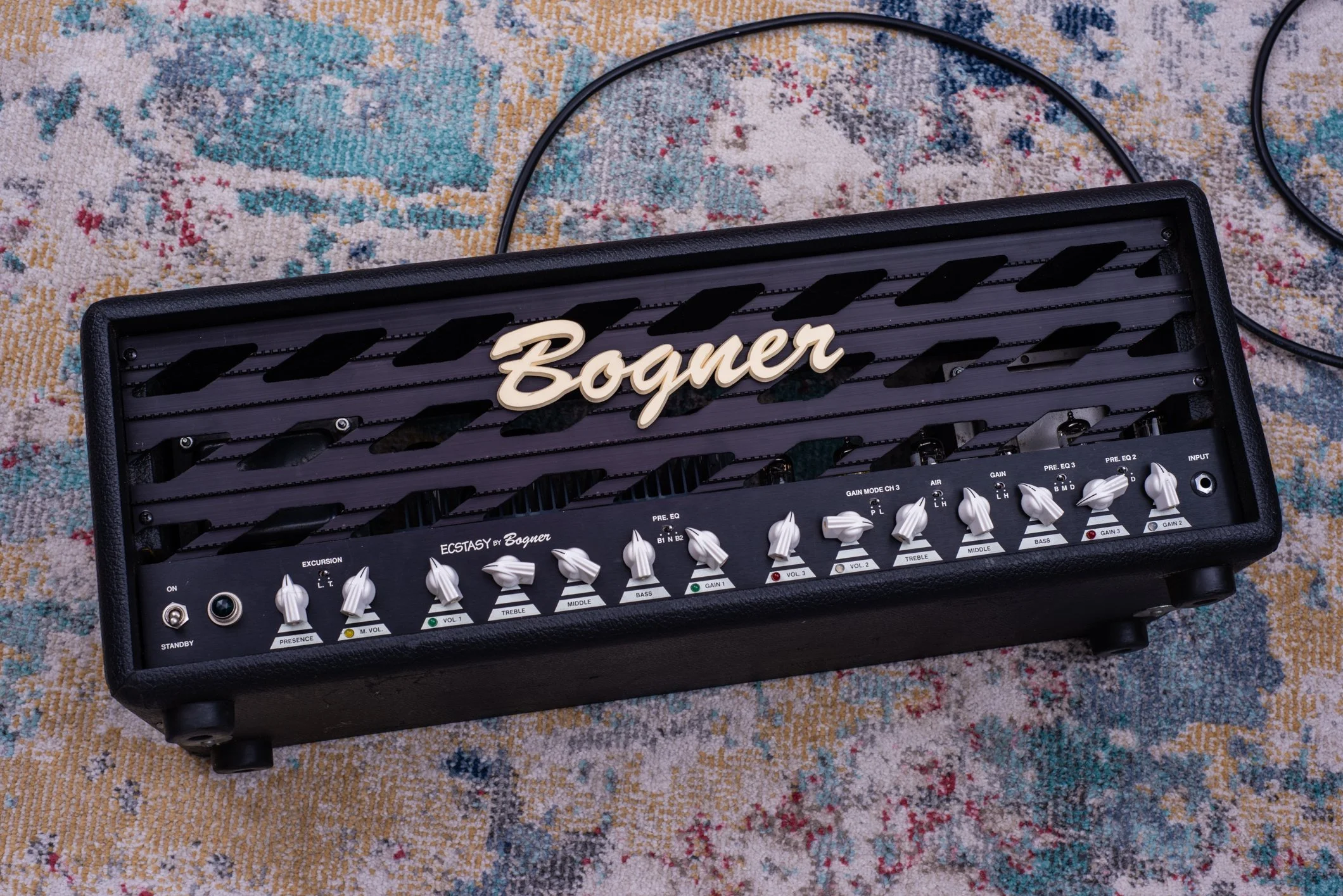
It came with the original manual from 1994 & sales receipt. This amp was first sold by Swissvale Music in PA, Nov 1994 - likely one of the last 100B's produced considering the date and serial number (#115).

It is more difficult to dial in at lower volumes than my 101B, but cranked up it feels much more natural - something I've seen in other threads about this amp and it rings true here. The funny thing is I expected it to be easier to dial because the 100B has an overall Master Volume control, though the 101B has this too on the rear panel. This overall master is only active when the loop is on, and another interesting thing - you HAVE to have an effect or a patch cable otherwise the loop button just mutes the amp. I'll admit I didn't spend much time playing it quietly so maybe the right combination of master vol + channel volume settings might've helped it at lower volumes (talking about ~90db here in the room).
Cranking it up to more regular volumes, the clean channel really surprised me. I think most people consider the green/clean channel to be one of the weak points of the 101B, but this amp feels quite a bit different. It reminds me a bit of my Bogner Goldfinger GF45. With the gain low, the 3-way bright switch gives a ton of flexibility and super spanky, twangy tones even with a humbucker. It stays uncompressed, can get very acoustic sounding. It's a tone I think funky players would really enjoy playing fast chords on. Turning up the gain and it stays clean, but gets more compressed, and the effect of the bright switches is less apparent. This is different from my 101B where it can get dirty as the gain is turned up - on the 100B, it only gets a tiny bit more hair. Turned way up with the bright switch in the center and it's jazz tone heaven. I'm just really impressed with the range of this channel and consider it to be better than the 101B in many ways (although I'll admit, I'm a sucker for a dirtied-up clean channel so I still love the 101's, in the same way I love the green ch on an EVH 5153). The GF45 comparison isn't perfect but that amp also stays very clean and I feel like I sense a little of the same DNA here, no surprise as it's the same designer.
The Blue channel is classic smooth XTC goodness, but it has a noticeable amount less gain than my 101B does at the same settings. I don't want to just repeat the same things others have said but some of that is similar to the green channel - a bit less compression on the 100B and that affects the "feel" of the amount of gain. I think this is also why clips of these amps sound so similar, but in the room and playing it there's a noticeable difference between the two amps. One other big difference is that the 100B's blue and red channels have 3-way bright switches, labeled "Bright" "Middle" and "Dark." And the Dark is... really muted. The 101B has the same 3-way switches, and I understand that functionally they work the same way, but the values definitely feel tweaked in comparison. The 101B's bright switches are labeled B1, N, B2 - so the middle position is darkest, and that doesn't feel quite as dark as the "dark" setting on the 100B. Obviously this is the channel where the magic lies, and it has an elasticity and fullness to the notes that is addicting. The frequencies extend deeper than the 101B especially with the Excursion switch set to “L” for Loose, but even set to “T” it doesn’t tighten up like a modern metal amp would. That’s a good thing for the middle-high gain soulful music this channel was designed for, but it is a little less versatile than the 101B’s version which can even do lower tuned metal acceptably.
Spilling over into the Red channel, it's the same core tone with more gain. I don't have a 100B schematic, but I do have one for the 101B, and on the 101B it is the same signal path as the Blue just with an extra tube stage switched in - with a 10k cathode resistor (a "cold clipper," like a JCM800 2203, same value). I can extrapolate that this 100B probably works the same way, but the core voicing of this 100B feels a little darker, and a little less open. The negative to that is that I actually don't love this Red channel for high gain rhythms. I know any Ecstasy isn't the pinnacle of ultra high gain tones and they aren't meant for that (one of the reasons the Uberschall exists), but I really feel like I could make a good argument for the 101B's red channel for metal tones with the right combination of bright switches and EQ. This is simply an extension of the blue channel with more gain on tap and a little different texture from that extra assymetric clipping stage. What I like about that though, is that if you are a player who just absolutely loves and lives on the blue channel and just wants that same tone with slightly more gain for a solo or fill, this might be the best possible amp for you. It's a very natural transition and if you need a little more cut, set the blue channel to the "M" position and the red to the "Bright" on the 3-way switches and they just work great together when switching.
Another option to mention is that on this amp, only the Red channel has "plexi mode." Plexi mode (again, referring to the 101B schematic), drops two gain stages out of the circuit - so the amp becomes a simple two-tube-gain-stage design (just like a "plexi"). You trade the bright/normal or channel jumpering options of a real plexi for the bright switches, air, and exursion options of the Ecstasy. On the 101B, this is available on both blue and red channels, so you can go from a Plexi crunch sound directly to a Red high gain metal tone on one tap. On the 100B, that is not possible, the blue channel is always the same 3-stage design, then you choose whether you want Red to be the plexi or high gain channel - not both. Of course the channels are quite similar, but to do the same thing the 101B does you'd probably need to use red in plexi mode, then switch to blue + add a boost to hit the same gain saturation.
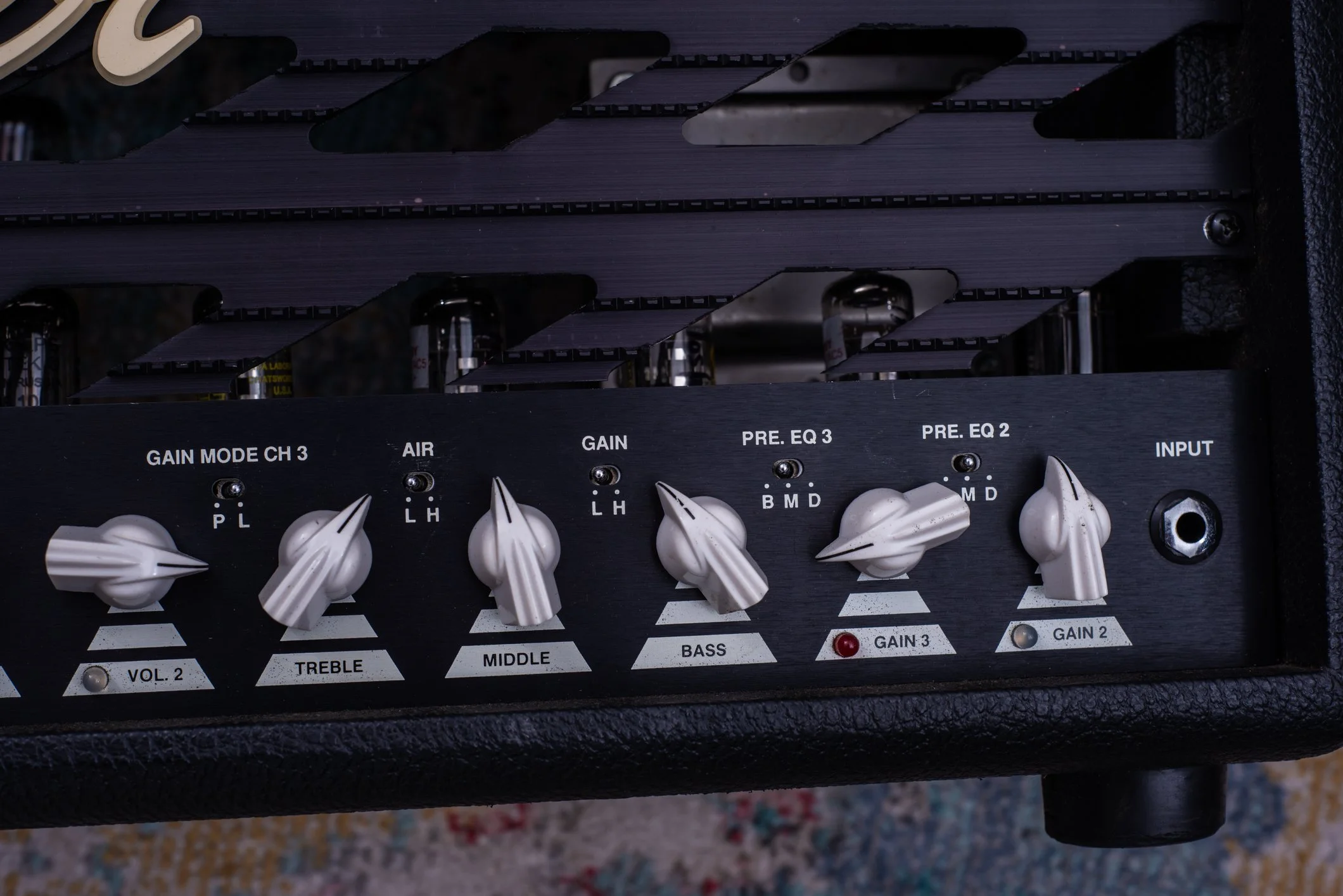
The Air switch I consider essential, and rarely turn it off. It is an upper mids gain bump, kind of like the Edge control on VHT Pittbulls. It adds a lot of clarity and perceived punch, and works on both blue and red, plexi and normal modes. This switch is replaced by the Structure switch on the 101B and is similar, but the value for the Air switch seems to have a stronger effect.
There is also a Gain switch that works on the Blue/Red channels. This should usually be set to “Low” and then you can use the footswitch Boost button to engage “High” gain mode. This is just a flat gain boost, but a really good sounding one. It’s a delicate balance to take a darker, fuller sounding amp like this and add gain without flubbing out the low end, so it’s really impressive the way each switch seems to work well both alone and in combination with others. The 100B Green channel has no boost, but the 101B adds a gain boost switch as well as another footswitch button so you can control the boost separately between Green and Blue/Red.
Moving to the power amp, there is an Excursion switch on the 100B which gives you two low end response options. It's a louder and beefier on the "L" setting, and I like that quality about these amps, but I think some may prefer the “T” setting especially on the Red channel. However I find the "T" mode to be a little too far the other way, and it doesn't have as much punch as I'd like. The 101B does this better, with two 3-way Excursion switches and two Presence controls, so you can use your preferred power amp configuration on either gain channel.
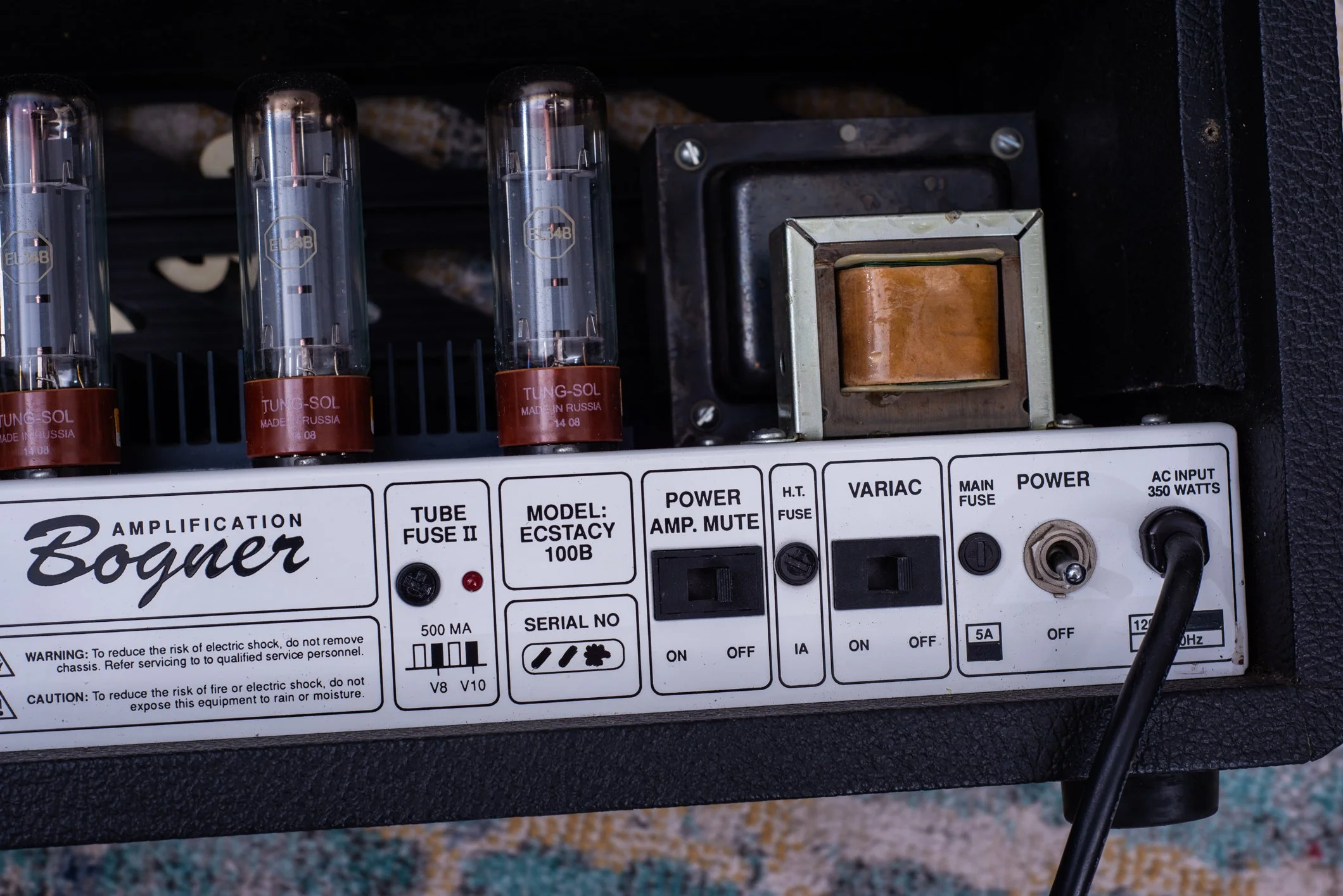
I haven't had much time to experiment with the loop, but one last feature to mention is that the 100B does not have the Class A/AB switch of some 101's (including mine), but instead it has a built in "Variac" switch on the rear panel. I personally LOVE my 101B in Class A mode so I do miss that on this amp. The Variac switch drops the volume, adds a bit of compression to the feel of playing the amp - it sounds good, reminds me a little bit of switching a Rectifier from Bold to Spongy, but it's a more extreme difference than that. It’s already a pretty spongy playing amp though, so I find it sounds better with the Variac off most of the time.
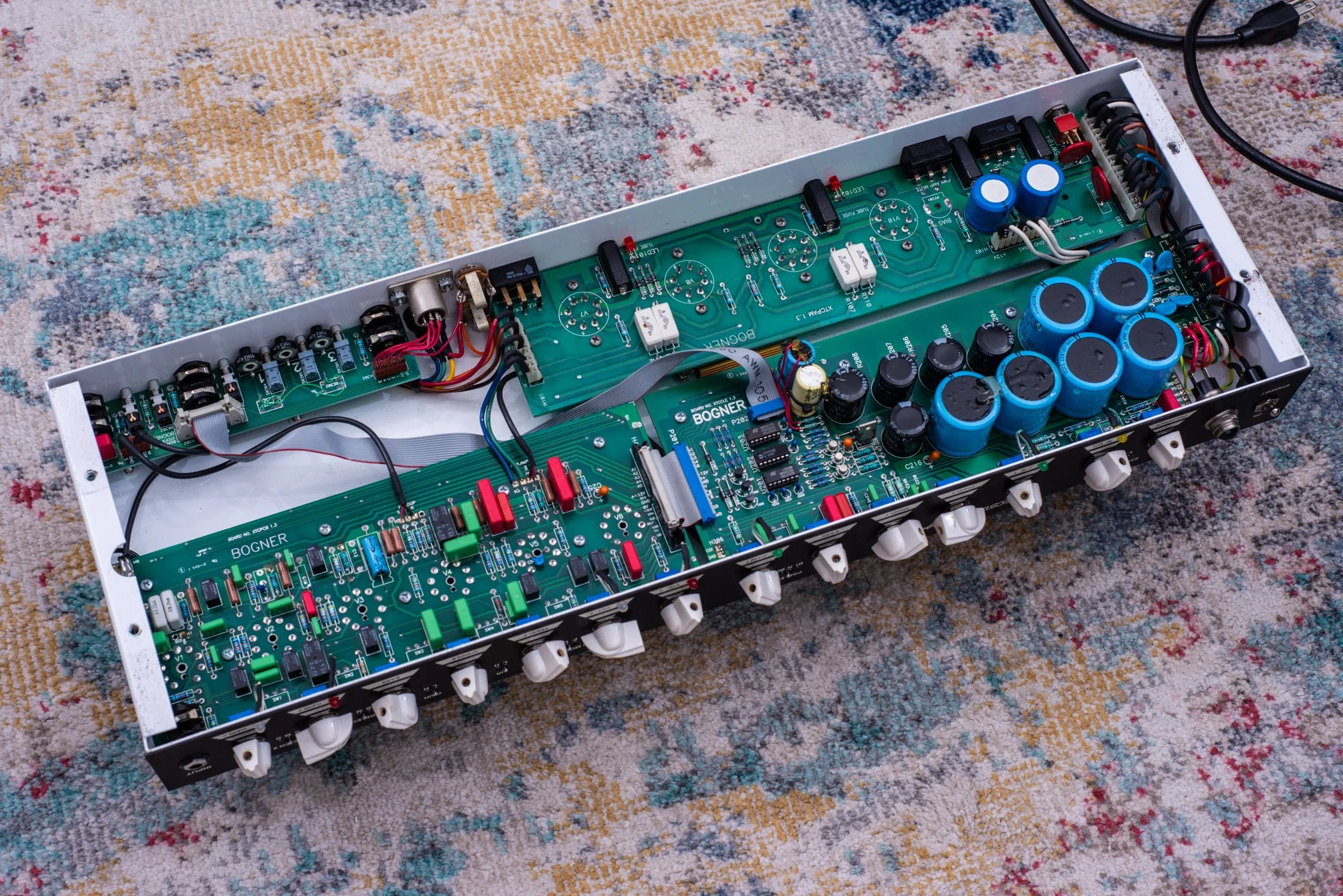
The amp is equipped with 1993 dated Mercury transformers, one in black like we are familiar with from Mercury, the other in a more traditional silver. Inside, components are split across four circuit boards, with a large ribbon connector between the two front panel boards. Fit and finish is superb as expected, and the white chassis is especially cool. It also has quite the array of large capacitors, and mounting them internally like this does make the top look very clean. That side of the amp has a beefy heat sink mounted to the top of the chassis to help with dissipation, although I haven’t noticed any major heat issues so far even after a few multi-hour sessions.
Overall, I really pleased to have the chance to own an amp like this. This is the first amp I've owned that I'd consider to be kind of "amplifier royalty." It's impressive especially for the time, and I can see why people are so attached to these, and why they don't come up for sale often.
Thanks for reading. I have disassembled and cleaned the entire amp, so here are some pictures for your viewing pleasure.